A first-time homeowner's guide to landscaping in Austin
By Rachel Delgado · Updated 2026-07-03
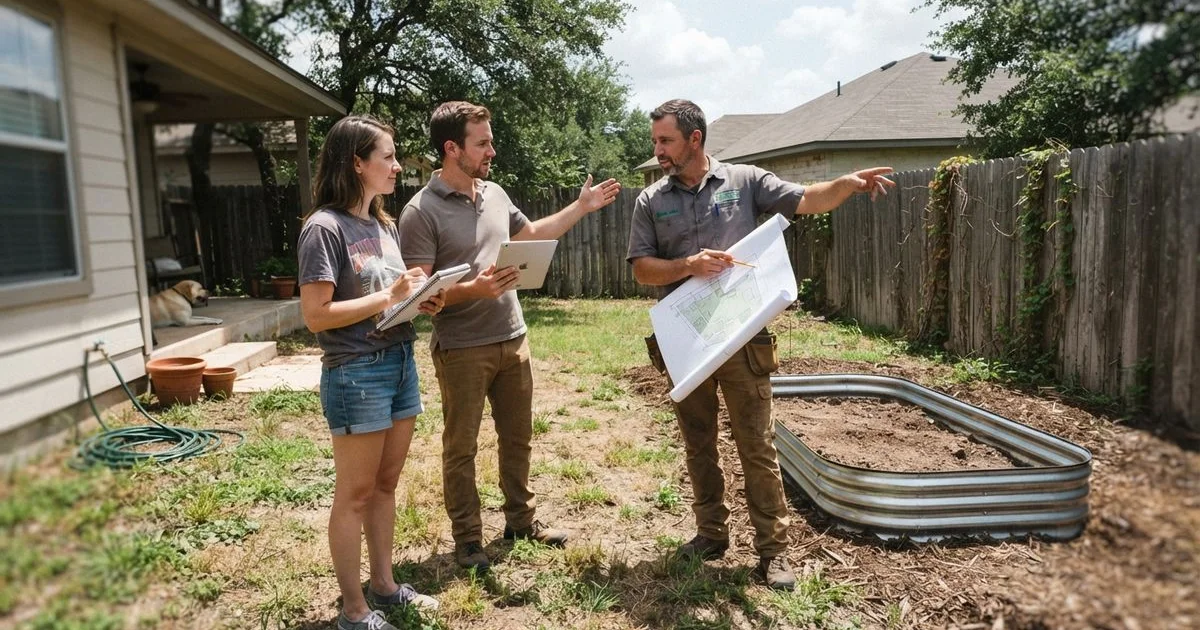
Inheriting a yard, whether it’s neatly kept or completely neglected, comes with a learning curve if you haven’t dealt with Austin’s soil and climate before. Here’s a sensible order to tackle things in the first year.
Start by observing, not fixing
Before spending anything, spend a season watching the yard: where water pools after rain, which areas get full sun versus shade through the day, and what’s already growing (even weeds can tell you something about soil moisture and drainage). This sounds slow, but fixing the wrong problem first, planting shade-lovers in a spot that turns out to bake all afternoon, is a more expensive mistake than waiting a season to learn the property.
Priority order for a new yard
| Priority | What to address | Why it comes first |
|---|---|---|
| 1 | Drainage and standing water | Prevents foundation and soil issues |
| 2 | Lawn health (soil test, correct grass type) | Foundation for everything else |
| 3 | Irrigation check or install | Protects new planting investment |
| 4 | Beds, planting, and design | Builds on a healthy base |
| 5 | Hardscape (patios, walls) | Bigger investment, plan once basics are solid |
Fixing drainage and lawn health before investing in planting or hardscape isn’t the most exciting order, but it avoids paying twice: once for something that looks good short-term, and again to fix an underlying problem that undoes it.
Getting to know Austin’s soil
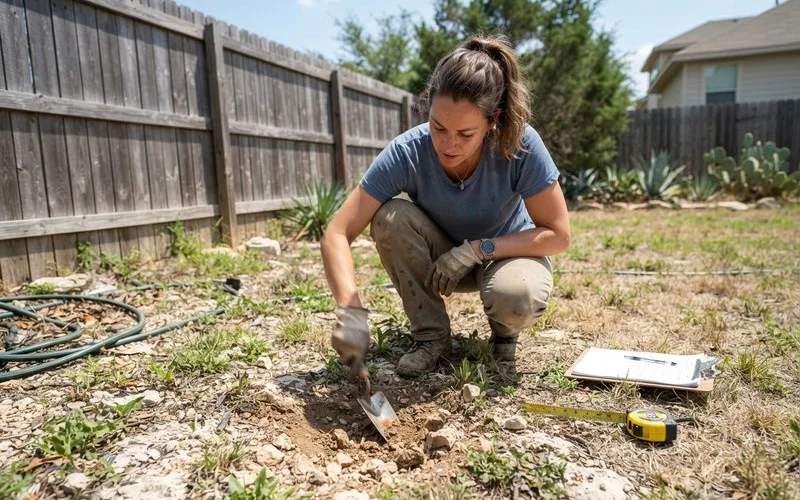
Central Texas soil varies a lot by neighborhood, from heavy blackland clay that holds water and expands and contracts with moisture, to caliche layers that block drainage and root growth. A basic soil test early on tells you what you’re actually working with, which affects everything from grass type to what will realistically thrive in a planting bed.
When to DIY and when to bring in help
Basic mowing, mulching, and small bed refreshes are reasonable to handle yourself even as a first-timer. Grading, drainage correction, and irrigation design are areas where a mistake is expensive to undo, so professional input earns its cost there. If you’re not sure which category something falls into, a single consultation with a landscape designer, even without committing to a full project, can help you sequence the work correctly.
Setting a realistic first-year budget
Rather than trying to do everything at once, many first-time Austin homeowners find it more manageable to budget for the essentials (drainage, lawn health, basic beds) in year one, and treat bigger design or hardscape projects as a second or third year plan. This also gives you time to actually live in the space and figure out how you use the yard before committing to a permanent layout.
Getting quotes without overcommitting
Get a walkthrough and quote from a landscape professional even if you’re not ready to start, since it gives you a realistic sense of cost and priorities without any obligation. Compare a couple of quotes and ask each one what they’d tackle first, since their answer often reveals how much they’ve actually assessed the property versus offering a generic plan. Our guide on what to expect from a landscape design and installation project in Austin walks through the process once you’re ready to move past the walkthrough stage.
Learning your grass and plants before changing anything
If the previous owner already planted the yard, spend a season figuring out what’s actually there before ripping anything out. A patch that looks dead in winter might just be a dormant warm-season grass, and a plant that looks unremarkable in spring might turn out to be well suited to the spot come summer. Removing established, healthy plants only to replace them with something that needs more coddling is a common first-year mistake that costs both money and a season of adjustment.
Building a relationship with one or two providers
Rather than shopping for a new company every time something comes up, many first-time homeowners find it easier to build a working relationship with one or two providers, a lawn care company and a landscaper, say, who get to know the property over time. They’ll notice a drainage issue developing or a tree starting to struggle faster than a new company seeing the yard for the first time, and that familiarity tends to pay off in fewer surprises.
A note on patience
A new yard rarely looks finished after one season, and that’s normal. Grass takes time to fill in, new plants need a year or two to establish fully, and priorities often shift once you’ve actually lived through a full year of Austin weather in the space. Treating the first year as a learning period rather than a race to a finished look tends to produce a better result and a smaller budget than trying to do everything at once.
To find landscape design and installation providers serving Austin, visit the landscape design and installation hub. See our methodology for how we evaluate providers, and learn more about this directory on the homepage.
FAQ
- What should I check first when I move into a new house?
- Start by watching how water moves during a rain (any pooling near the foundation), noting which areas get full sun versus shade, and identifying any dead or struggling plants left by the previous owner.
- Do I need to hire a designer for a starter yard?
- Not necessarily. For a basic refresh (mulch, a few beds, healthy lawn care), a designer is often unnecessary. For grading, drainage, or hardscape work, professional input is worth the cost to avoid expensive mistakes.
- What's the first thing to fix in a neglected yard?
- Drainage and soil health, generally. Fixing standing water or compacted soil before planting anything new prevents having to redo the work later once the underlying problem shows up again.
- How much should I budget in year one?
- This varies widely by lot size and starting condition. A reasonable approach is to budget for the essentials (lawn health, drainage, basic beds) in year one and treat larger hardscape or design projects as a longer-term plan.
Related on this site
- Browse landscape design & installation providers
- Best landscape design & installation in Central Texas →
- What to expect from a landscape design and installation project in Austin
- Getting your yard ready to sell a house in Austin
- Xeriscape and water-wise rebates in Austin: free and low-cost ways to cut your water bill
- Landscaping for renters in Austin: what you can and can't change
- All guides →