What sprinkler and irrigation installation costs in Austin
By Rachel Delgado · Updated 2026-06-15
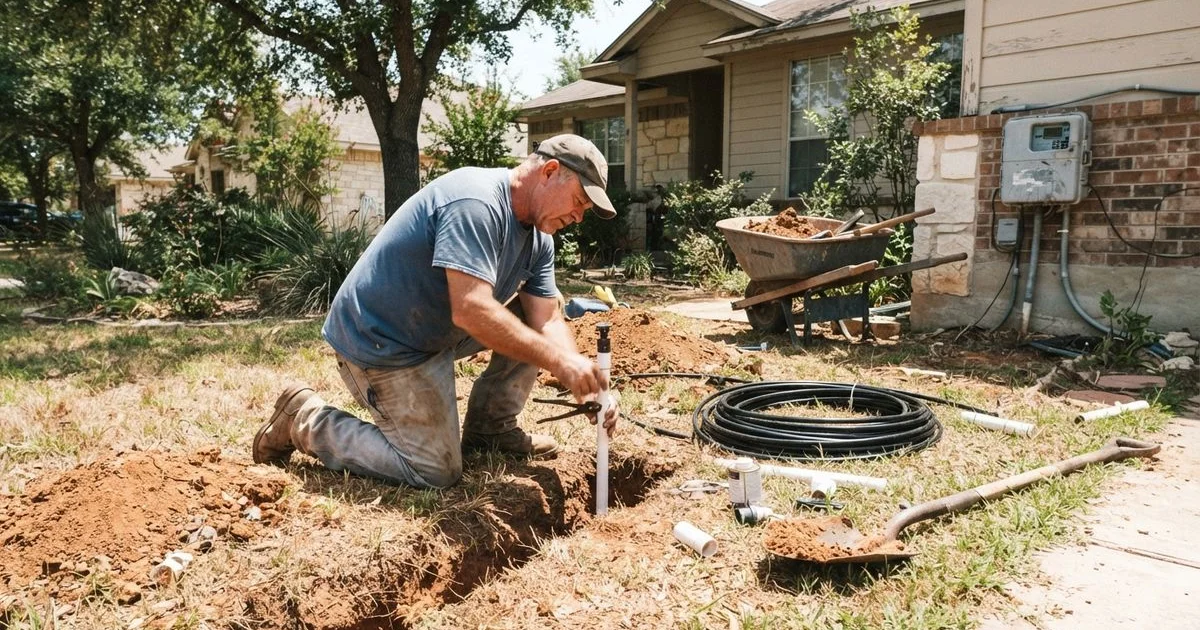
Irrigation is one of the bigger single investments in an Austin yard, and the price range homeowners get quoted can be wide. A one-zone drip system for a small bed is a different job than a whole-property spray and rotor layout with six or eight zones, and the quote should reflect that.
What drives the price
Two things matter more than anything else: total area covered and number of zones. Each zone needs its own valve, run of pipe, and matched heads, so a yard split into more zones (because of sun exposure, slope, or plant type) costs more to wire and plumb even at the same square footage.
| Factor | Effect on cost |
|---|---|
| Yard size | More area means more pipe, heads, and trenching |
| Number of zones | Each zone adds a valve, wiring run, and labor |
| Soil type | Caliche or rocky soil slows trenching, adds labor |
| System type | Smart controllers and drip zones cost more upfront |
| Water pressure | Low pressure sometimes requires a booster pump |
Standard spray and rotor systems are the baseline. Adding a smart controller with weather-based scheduling, or drip zones for beds and foundation plantings, raises the upfront number but tends to lower the water bill over time, which matters given Austin’s summer watering restrictions.
Installation vs repair
A full new installation is priced very differently from a repair or a valve replacement on an existing system. If your system is more than 10-15 years old and losing pressure in one zone, a diagnostic visit to check for a broken line or failed valve is usually far cheaper than assuming you need a full replacement. Get a technician to actually run the zones and check pressure before agreeing to a full re-install.
How soil and terrain change the trench work
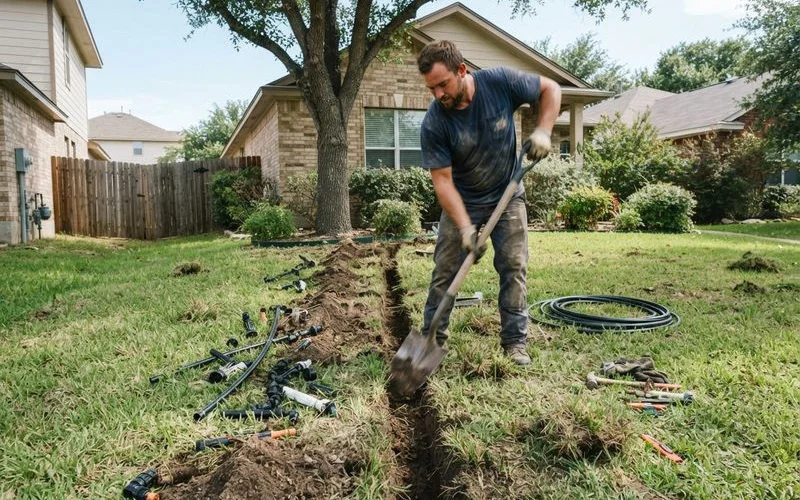
Austin’s mix of blackland clay and caliche affects irrigation installation more than most homeowners expect going in. Clay holds water and can make trenching slow going after rain, while caliche is dense enough that a crew may need heavier equipment to cut through it at all. Either condition adds labor hours that show up in the final invoice, and a company that’s worked in your specific part of Austin before should be able to flag this during the walkthrough rather than discovering it mid-dig and revising the price upward.
Retrofitting an older yard
Adding irrigation to an established yard with existing trees, beds, and hardscape is generally more expensive than laying out a system on bare dirt, since the crew has to route lines around root systems and existing structures instead of planning a clean grid. If you’re retrofitting, ask whether the quote accounts for hand-digging near mature trees, since machine trenching too close to roots can damage them.
The Texas licensing requirement
Texas law requires irrigation work to be performed or directly supervised by a state-licensed irrigator through the Texas Commission on Environmental Quality. Ask any company quoting a new system for their license number and confirm the person supervising the job actually holds it, not just the business owner in a different role. Unlicensed installation work is a real risk: it can fail inspection, void warranties, and create liability if something goes wrong with backflow into the public water supply.
Getting an accurate quote
Because zone count and soil conditions vary so much house to house, a phone estimate is only ever a rough guide. Ask for an in-person walkthrough where the technician measures the area, checks your water pressure, and tells you the zone layout before finalizing a number. A written quote should break out the cost per zone, the controller type, and whether a backflow preventer and permit are included, so you can compare apples to apples between companies.
Fair pricing and clear communication before the work starts are the two things that came up most often when Austin homeowners were happy with their irrigation installer. A company that walks you through the zone plan and the reasoning behind it is usually easier to trust with the invoice later.
To compare irrigation companies serving your part of Austin, see the irrigation and sprinkler systems hub, and check our methodology for how we score and rank local providers. More on this directory is on the homepage.
FAQ
- How much does a new sprinkler system cost in Austin?
- Cost scales with yard size and the number of zones, since each zone needs its own valve, wiring, and head layout. A small front yard with one or two zones costs far less than a full-property system with six or more.
- Do I need a permit to install irrigation in Austin?
- Yes, the City of Austin generally requires an irrigation permit and inspection for new systems, and the work must be done or supervised by a state-licensed irrigator.
- Is a smart controller worth the extra cost?
- For many Austin yards, yes. Watering restrictions and rate structures reward systems that adjust to weather, and a smart controller often pays back part of its cost in lower water bills.
- What adds the most to an irrigation quote?
- Zone count is the biggest factor, followed by water pressure issues, rocky or caliche soil that slows trenching, and whether a backflow preventer already exists on the property.
Related on this site
- Browse irrigation & sprinkler systems providers
- Best irrigation & sprinkler systems in Central Texas →
- Do you need a licensed irrigator in Texas? What the law requires
- What lawn care costs in Austin: mowing, maintenance, and what changes your rate
- What retaining walls and hardscaping cost in Austin
- All guides →