What to expect from a landscape design and installation project in Austin
By Rachel Delgado · Updated 2026-06-18
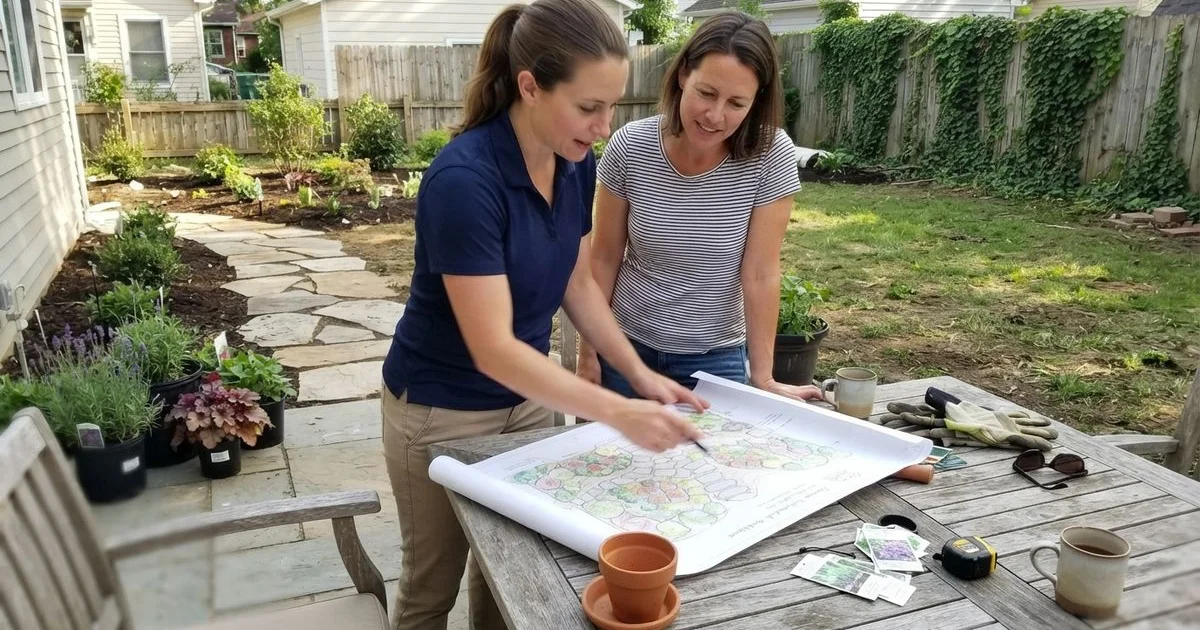
A landscape design and installation project has more steps than most homeowners expect, and knowing the sequence ahead of time makes it easier to plan around. Here’s roughly how it runs for a mid-size Austin residential project. If you’re planning your first project after buying a place, our first-time homeowner’s guide to landscaping covers the decisions that tend to come up before you even get to this stage.
The first consultation
A good first visit is mostly about listening: how you use the yard, what’s not working (drainage, bare dirt, an overgrown bed), and what budget range you’re working with. A designer worth hiring will walk the property, note sun exposure and soil conditions, and ask about long-term plans (kids, pets, future additions) before sketching anything.
Design and proposal
For anything beyond a simple planting refresh, expect a design phase: a scaled plan showing plant placement, hardscape layout, and irrigation zones. This is the stage to push back on anything that doesn’t fit how you actually use the space. Changing a plan on paper is cheap; changing it once a patio is poured is not.
| Phase | Typical duration | What happens |
|---|---|---|
| Consultation | 1 visit | Walkthrough, budget discussion |
| Design | 1-3 weeks | Plan drawn, revisions, proposal finalized |
| Permitting (if needed) | 1-4 weeks | Required for larger hardscape or grading work |
| Installation | 1-8 weeks | Grading, hardscape, planting, irrigation |
| Final walkthrough | 1 visit | Plant list, warranty terms, care instructions |
Installation day to day
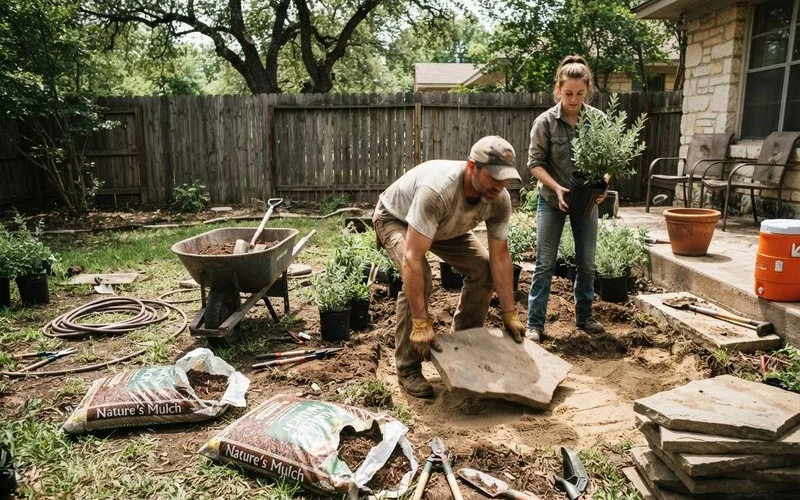
Installation typically moves in a rough order: grading and drainage work first, then hardscape (walls, patios, walkways), then irrigation lines, and planting last so new plants aren’t damaged by heavy equipment. A crew that skips straight to planting before grading is settled is one to ask questions about, since Austin’s clay soil shifts and can undo careful planting if the base isn’t right.
What separates a good project from a rough one
Attention to detail and clear communication came up repeatedly from Austin homeowners describing landscape projects that went well: crews who explained what they were doing and why, and who cleaned up thoroughly at the end of each day rather than leaving debris until the final walkthrough. On the flip side, the most common frustration was a project that stalled mid-installation with no clear timeline for finishing, so it’s worth asking upfront how the company handles delays (weather, material backorders) and how they’ll keep you updated.
Setting a realistic timeline
Material lead times, especially for specialty stone or plants not typically stocked locally, can add weeks to a schedule that otherwise looks straightforward. Ask early in the design phase whether anything you’ve chosen has a longer lead time, so it doesn’t become a surprise once the crew is scheduled to start.
Payment structure and what’s normal
Most Austin landscape companies ask for a deposit before ordering materials, with the balance split across milestones (start of installation, completion of hardscape, final walkthrough) rather than one lump sum at the end. A payment schedule tied to visible progress protects both sides: you’re not paying in full before work is done, and the company isn’t carrying the full material cost on their own. Be cautious of a contractor asking for a very large deposit relative to the total project cost before any materials have been ordered.
What to do if weather or delays push the schedule
Austin’s weather, heavy rain in spring, extreme heat in summer, can push an installation timeline back, and a reasonable company will tell you this rather than promising a date they can’t keep. Ask how they communicate delays: a quick text update when a weather day is lost is a very different experience than radio silence for a week followed by a vague explanation. This is one of the clearer signals of how a company will handle the rest of the relationship if something unexpected comes up mid-project.
After installation: the establishment period
New plants and sod need a few weeks of closer attention, more frequent watering, checking for stress signs, before they’re settled into a normal maintenance routine. Ask whether the installer includes a follow-up visit or two during this window and what their warranty covers if a plant doesn’t establish. A short warranty on plant material is standard in the industry, so it’s worth confirming the exact terms rather than assuming everything is covered indefinitely.
To see landscape design and installation companies serving your part of Austin, visit the landscape design and installation hub. Our methodology explains how we score and rank the businesses listed there. Learn more about this directory on the homepage.
FAQ
- How long does a landscape design project take from start to finish?
- A modest bed redesign can wrap in a couple of weeks. A full-property design with hardscape and irrigation often runs six to twelve weeks once design, permitting, and material lead times are factored in.
- Do I need a formal design before installation starts?
- For a small refresh, often not. For anything involving grading, hardscape, or irrigation zones, a design phase saves money by catching conflicts (like a tree root in a planned wall footing) before crews are on site.
- Can I make changes once installation has started?
- Small changes are usually workable. Major changes (moving a patio, adding a wall) once materials are ordered typically add cost and delay, so it's worth finalizing the plan before the crew starts digging.
- What should I ask for at the final walkthrough?
- Ask for a plant list with care instructions, confirmation of what's under warranty and for how long, and a clear answer on who to call if something doesn't establish well in the first season.
Related on this site
- Browse landscape design & installation providers
- Best landscape design & installation in Central Texas →
- A first-time homeowner's guide to landscaping in Austin
- Getting your yard ready to sell a house in Austin
- How tree removal works in Austin, from quote to cleanup
- DIY lawn care vs hiring a pro in Austin: what actually makes sense
- All guides →