Lawn chemical and pesticide safety for kids and pets in Austin
By Rachel Delgado · Updated 2026-06-28
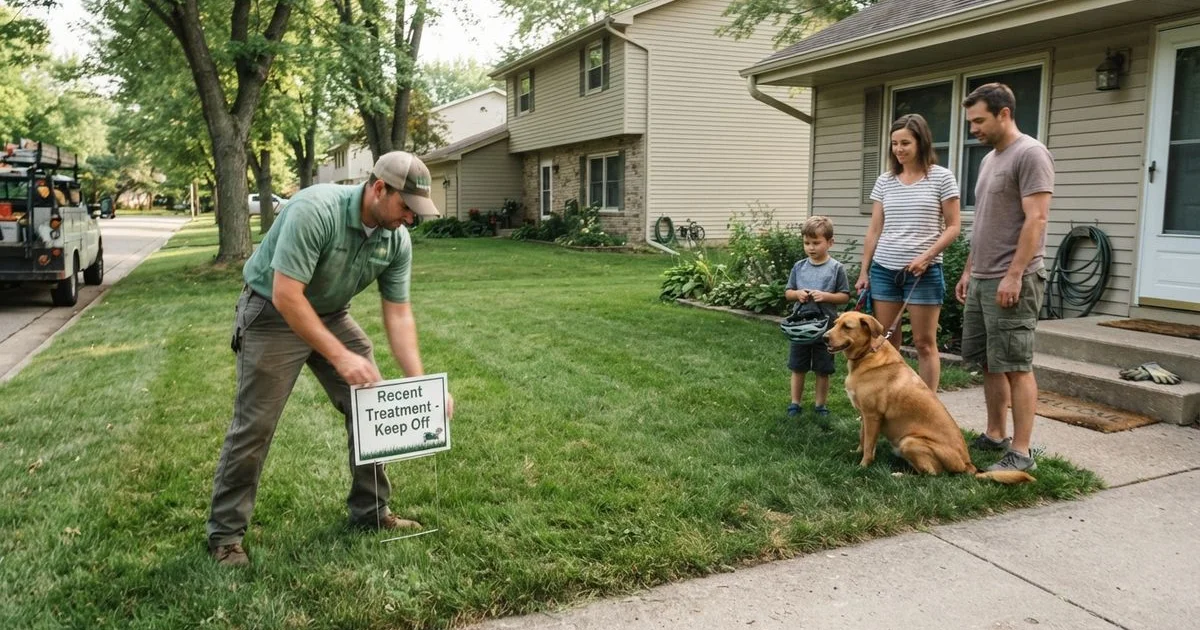
Most homeowners don’t think much about what’s being sprayed on the lawn until a dog starts rolling in freshly treated grass or a toddler is playing barefoot on it an hour later. A little planning around timing and product choice goes a long way toward keeping a healthy lawn without unnecessary risk.
This is general information, not medical or veterinary advice. If a child or pet shows symptoms after exposure to a lawn product, contact a doctor, veterinarian, or poison control promptly.
What’s actually being applied
Standard lawn care programs typically combine fertilizer, pre- and post-emergent weed control, and sometimes a pest treatment for grubs or fire ants. Each has different handling guidance, and the safest approach is to always check the specific product label rather than assume all lawn treatments carry the same risk or wait time.
| Product type | General re-entry guidance | Notes |
|---|---|---|
| Fertilizer (granular) | Water in, then generally safe | Keep pets from eating granules directly |
| Weed control (liquid) | Often a few hours after drying | Check label for exact time |
| Pest treatment | Varies by product | Some require longer wait times |
| Organic/eco treatments | Often shorter or no wait | Still confirm on the label |
Practical steps that reduce risk
A few habits make a real difference regardless of which products are used:
- Keep kids and pets off the lawn until treatment has dried or been watered in, and check the product label for the specific recommended wait time rather than guessing.
- Store any leftover product in a locked shed or garage, out of reach, in its original labeled container.
- Ask your lawn care provider for the exact product names used so you can look up handling guidance yourself, especially if anyone in the household has allergies or asthma.
- Rinse paws and hands after time on a recently treated lawn, particularly for dogs that tend to dig or chew on grass.
Organic and lower-chemical options
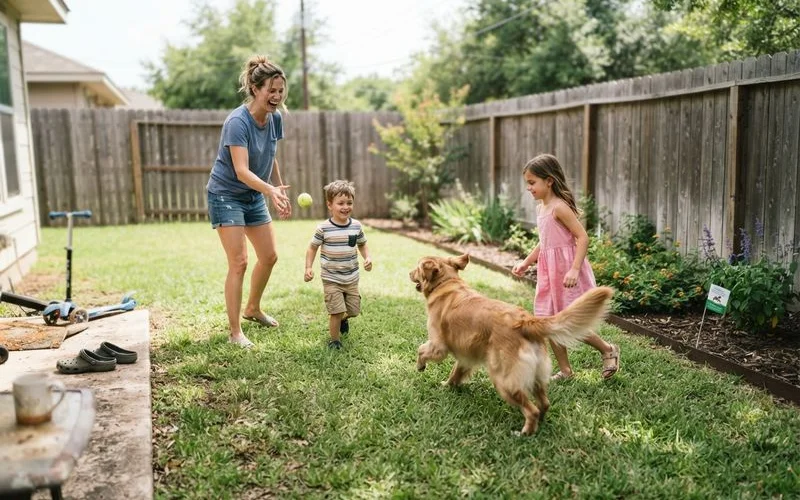
Organic lawn care programs generally rely on compost, corn gluten meal for weed suppression, and beneficial insects or nematodes for pest control instead of synthetic herbicides and pesticides. These tend to have shorter or no re-entry wait times and lower ingestion risk, though they aren’t entirely risk-free either, so the same label-reading habit still applies. Results with organic programs also tend to build over a season or two rather than showing the fast visible change synthetic products can, which is worth knowing going in if you’re switching from a conventional program. If cutting water use is also part of the goal, our guide on xeriscape and water-wise rebates in Austin covers the other side of a lower-input yard.
Questions worth asking a lawn care company
Ask directly what products are used, whether an organic or reduced-chemical program is available, and what the recommended wait time is after each treatment. A company that answers clearly and doesn’t get defensive about the question is one that’s used to homeowners asking, which is a reasonable thing to want given kids and pets are the ones spending the most time barefoot on the grass.
Signs of a reaction worth watching for
Most exposure to properly applied lawn products doesn’t cause a reaction, but it helps to know what to watch for after a treatment: skin redness or itching in kids, or drooling, vomiting, or unusual lethargy in pets that spend time on a freshly treated lawn. These aren’t common outcomes when wait times are followed, but if something seems off, having the specific product name on hand makes it much easier for a doctor, vet, or poison control to give accurate guidance quickly.
Scheduling treatments around how the yard is actually used
If kids or pets use the yard daily, ask whether treatments can be scheduled for a day when the household can more easily keep them off the grass for the wait period, rather than a fixed day that happens to fall on a weekend full of outdoor plans. Some companies are flexible about this if you ask; others run a fixed route schedule. Either way, knowing the schedule in advance beats finding out a treatment happened when you let the dog out that morning.
Marking the yard after treatment
Many companies place small flags or a sign in the yard after a treatment as a visible reminder of the wait time, and it’s worth asking for this if it isn’t already standard practice, especially in a household with visiting kids, pet sitters, or a lawn crew that comes on a different day than the treatment crew. A simple flag removes the guesswork for anyone who wasn’t around when the treatment happened.
To find organic and eco-friendly lawn care providers in Austin, visit the organic and eco-friendly lawn care hub. See our methodology for how listings are evaluated. Learn more about this directory on the homepage.
FAQ
- How long should kids and pets stay off a lawn after treatment?
- This varies by product, but a common guideline is to keep kids and pets off until the treatment has dried, often a few hours, and to check the specific product label for the exact wait time.
- Are organic lawn treatments actually safer?
- Generally yes for immediate exposure risk, since they avoid synthetic herbicides and pesticides, though some organic products still warrant care around ingestion, so read labels either way.
- Can I ask a lawn care company what products they use?
- Yes, and you should. A reputable company will tell you exactly what they're applying and can typically offer an organic or reduced-chemical program if you ask.
- Is fertilizer as risky as weed killer or pesticide?
- Fertilizer is generally lower risk for direct contact but can still cause stomach upset if ingested in quantity, which matters for pets who dig or eat grass. Keep pets away until it's watered in.