Do you need a licensed irrigator in Texas? What the law requires
By Rachel Delgado · Updated 2026-06-24
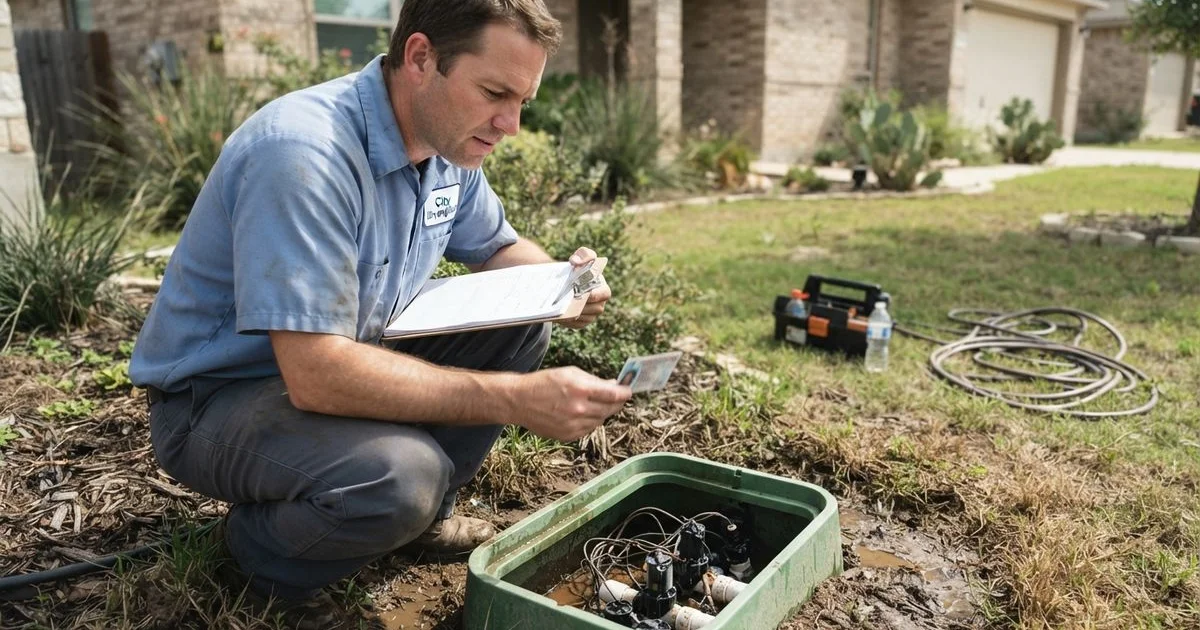
Texas takes irrigation licensing seriously, more seriously than many homeowners realize until something goes wrong. State law requires irrigation installation and repair work to be performed or directly supervised by a licensed irrigator, and that requirement exists for a real reason: a poorly installed system can let contaminated water flow backward into the public water supply.
This is general information, not legal advice. Confirm current licensing requirements with the Texas Commission on Environmental Quality or a licensed irrigator before hiring for irrigation work.
Why the license requirement exists
Irrigation systems connect directly to a property’s water supply, and without proper backflow prevention, contaminated water (from fertilizer, soil, or standing water in the system) can theoretically siphon back into the drinking water line. Licensed irrigators are trained specifically on backflow prevention, correct installation practices, and system design that avoids this risk. It’s a narrower, more technical license than general landscaping or lawn care.
What to check before hiring
| Step | Why it matters |
|---|---|
| Ask for the license number | Confirms the company has a state-licensed irrigator on staff |
| Verify it’s current | Licenses can lapse or be suspended |
| Confirm who’s on-site | The licensed person should supervise, not just hold the license on paper |
| Check for a permit | New installations typically require a city permit tied to the licensed irrigator |
A legitimate irrigation company should provide their license number without hesitation. If a company is vague or defensive about this question, that’s worth treating as a red flag, not a minor detail.
What can go wrong without it
Unlicensed irrigation work carries real consequences beyond just a lower-quality job. It can fail a required city inspection, which means redoing the work. It can void the warranty on parts like valves and controllers. And in the worst case, a missing or faulty backflow preventer creates a genuine contamination risk, which is exactly what the licensing law is designed to prevent.
Repairs vs new installation
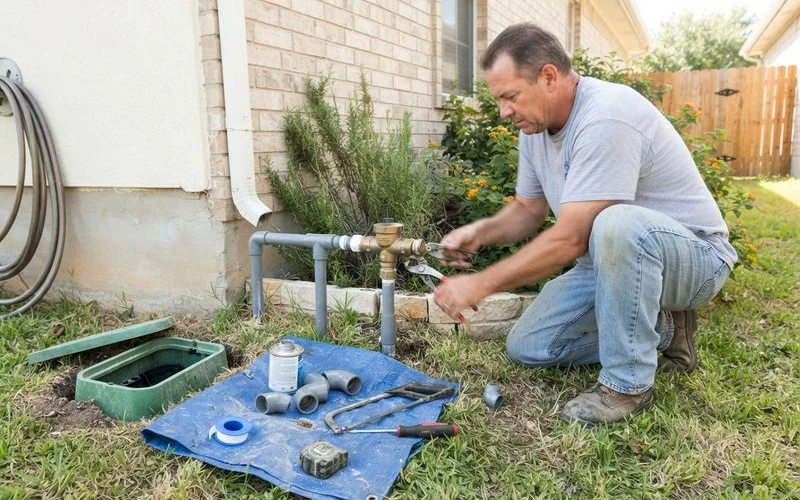
The licensing requirement generally applies most strictly to new installations and significant system changes, since that’s where backflow prevention design matters most. Smaller repairs, like replacing a broken sprinkler head, are more routine, but if a company is doing anything involving valves, the controller wiring, or the backflow device itself, it’s still worth confirming a licensed irrigator is involved.
A quick gut check before you sign
If a quote for a full irrigation system seems unusually low compared to others you’ve gathered, ask directly whether the crew doing the work is licensed and whether the price includes pulling a permit. A lower price that skips licensing and permitting isn’t actually a deal, since the cost of failed inspections or redone work later usually outweighs the initial savings. Our breakdown of what sprinkler and irrigation installation costs in Austin explains what a properly licensed, permitted quote should actually include.
Apprentices and trainees on a licensed crew
It’s common and legal for a licensed irrigator to supervise trainees or apprentices on a job, so seeing someone other than the license holder doing hands-on work isn’t automatically a problem. What matters is that a licensed person is genuinely overseeing the work and available to catch mistakes, not that the license holder personally digs every trench. If you’re unsure, it’s reasonable to ask who on the crew holds the license and how closely they’re supervising that day’s work.
What a licensed irrigator actually checks for
Beyond installing pipe and heads, a licensed irrigator is trained to verify water pressure is appropriate for the system design, confirm the backflow preventer is installed correctly and tested, and make sure the system won’t cross-connect with the potable water supply in a way that creates a health risk. These are the technical checks that separate a system that passes inspection from one that looks fine but fails a safety review down the line.
Checking a license yourself
You don’t have to take a company’s word for it. The Texas Commission on Environmental Quality maintains a public license lookup, and it takes only a minute to confirm a name and license number match before signing a contract. Doing this upfront, rather than after a problem shows up, is one of the simplest ways to protect yourself on a project that involves your home’s water supply.
To find licensed irrigation companies serving your part of Austin, visit the irrigation and sprinkler systems hub. Our methodology explains how listings on this directory are evaluated. Learn more on the homepage.
FAQ
- Is it legal to install my own sprinkler system in Texas?
- Homeowners can generally do work on their own residential property in some cases, but hiring a company to install or repair irrigation for you requires that the work be performed or supervised by a state-licensed irrigator.
- How do I check if an irrigation company is licensed?
- The Texas Commission on Environmental Quality maintains irrigator licensing records. Ask the company for their license number directly and confirm it before work begins.
- What's the risk of hiring an unlicensed irrigation installer?
- Unlicensed work can fail city inspection, void manufacturer warranties, and create liability if a backflow issue contaminates the water supply. It can also mean no real recourse if the work is done poorly.
- Does a licensed irrigator need to be on-site for every repair?
- Licensed supervision requirements can vary by the type of work. For anything beyond a simple head replacement, confirm the technician is either licensed or working under direct supervision of someone who is.
Related on this site
- Browse irrigation & sprinkler systems providers
- Best irrigation & sprinkler systems in Central Texas →
- What sprinkler and irrigation installation costs in Austin
- Tree removal laws and permits in Austin: what homeowners need to know
- Who is liable when a tree falls and damages a neighbor's property in Austin
- All guides →