What retaining walls and hardscaping cost in Austin
By Rachel Delgado · Updated 2026-06-17
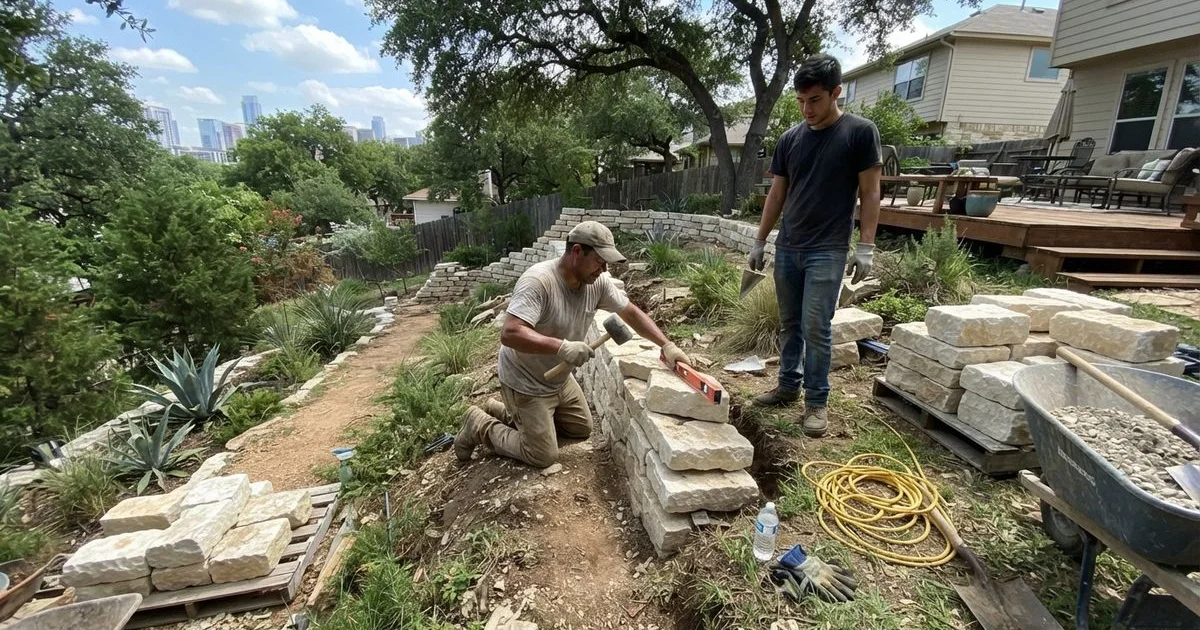
Hardscape work covers a wide range: a simple paver walkway, a full outdoor patio, or a retaining wall holding back a sloped yard. The price differences between these are large, and even within one category (say, retaining walls) the range is wide depending on height, material, and what is happening underground.
What a retaining wall actually costs
Retaining walls are usually priced per linear foot, and that price climbs with height. A short decorative wall under two feet is a very different project from a four- or five-foot wall holding back a significant grade change, which often needs engineering, deeper footings, and drainage behind the wall to keep water pressure from pushing it out over time.
| Wall height | Typical complexity | What adds cost |
|---|---|---|
| Under 2 ft | Low, often no permit needed | Material choice, site access |
| 2-4 ft | Moderate, drainage matters more | Excavation, base prep, drainage |
| Over 4 ft | High, often needs engineering | Permits, engineering, footings |
What drives hardscape pricing generally
Beyond wall height, a few things move the number on most Austin hardscape jobs:
- Site access. A backyard reachable only through a narrow side gate means more hand labor and less machine work.
- Soil conditions. Austin’s blackland clay and caliche layers both slow excavation and sometimes require extra prep.
- Material choice. Poured concrete, segmental block, natural stone, and flagstone all sit at different price points, with natural stone typically the most expensive.
- Drainage. Proper drainage behind a wall or under a patio adds cost upfront but prevents expensive failures later.
Where corners get cut, and why that matters
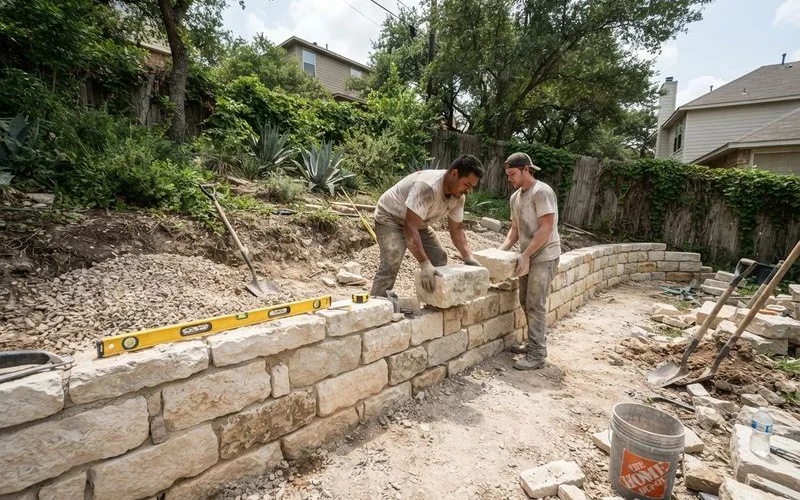
The most common way a hardscape quote comes in low is by skipping the parts you cannot see once the job is done: a properly compacted base, drainage behind a wall, or adequate footing depth. In Austin’s expansive clay soil, that shortcut tends to show up within a year or two as a leaning wall, cracked pavers, or standing water where there shouldn’t be any. When comparing quotes, ask specifically what base preparation and drainage each bid includes, not just the finished material.
Patios and walkways compared to walls
Patios and paver walkways are priced by square footage rather than linear footage, and the biggest cost swing there comes from material choice. Poured concrete is generally the most budget-friendly option, segmental pavers sit in the middle, and natural stone or flagstone tends to run highest, partly for the material itself and partly because it takes more skilled labor to lay well. A permeable paver system, which lets water drain through rather than run off, usually costs more upfront than a standard paver patio but can help with drainage on a property that already struggles with runoff.
Combining a wall and a patio in one project
If a project includes both a retaining wall and a patio, for instance a sloped backyard being leveled into a usable patio space, expect some efficiency from doing them together rather than as two separate jobs, since excavation and base work often overlap. A contractor quoting the combined project should be able to explain where the shared prep work reduces cost compared to hiring two crews for two separate phases.
Getting a fair comparison between quotes
Because so much of the cost is in unseen prep work, two quotes with a similar per-foot price can represent very different jobs. Ask each contractor to walk you through their base depth, drainage plan, and whether a permit or engineering is included for taller walls. A contractor who explains this without being asked twice is usually the one doing it right the first time.
Attention to detail and fair pricing were the two things that came up most consistently from Austin homeowners happy with their hardscape projects. That tracks: the visible finish matters, but the base underneath it is what determines whether the work lasts. If you’re budgeting a full yard project rather than a single feature, our breakdown of what lawn care costs in Austin covers the ongoing maintenance side of the number.
Browse local providers on the hardscaping and masonry hub, and see how we evaluate and rank them on our methodology page. Learn more about this directory on the homepage.
FAQ
- Why do retaining walls cost so much per foot?
- Most of the cost is in what you don't see: excavation, a compacted gravel base, drainage behind the wall, and engineering for anything over a few feet tall. The visible stone or block is a smaller share than most people expect.
- Is a cheaper wall material a bad idea in Austin?
- Not necessarily, but skipping proper drainage or a compacted base to save money is a bad idea regardless of material. Austin's clay soil expands and contracts with moisture, and a wall without drainage is more likely to lean or crack.
- How much does a patio cost compared to a retaining wall?
- Patios are usually priced per square foot of surface, while walls are priced per linear foot and height. A modest patio and a modest retaining wall can land in a similar overall range, but a tall wall with engineering requirements often costs more.
- Do I need a permit for a retaining wall in Austin?
- Walls above a certain height typically need a permit and, in some cases, an engineer's stamp. Check with the city or ask your contractor to confirm before work starts, since this varies by wall height and location on the property.