A seasonal lawn care calendar for Austin
By Rachel Delgado · Updated 2026-07-08
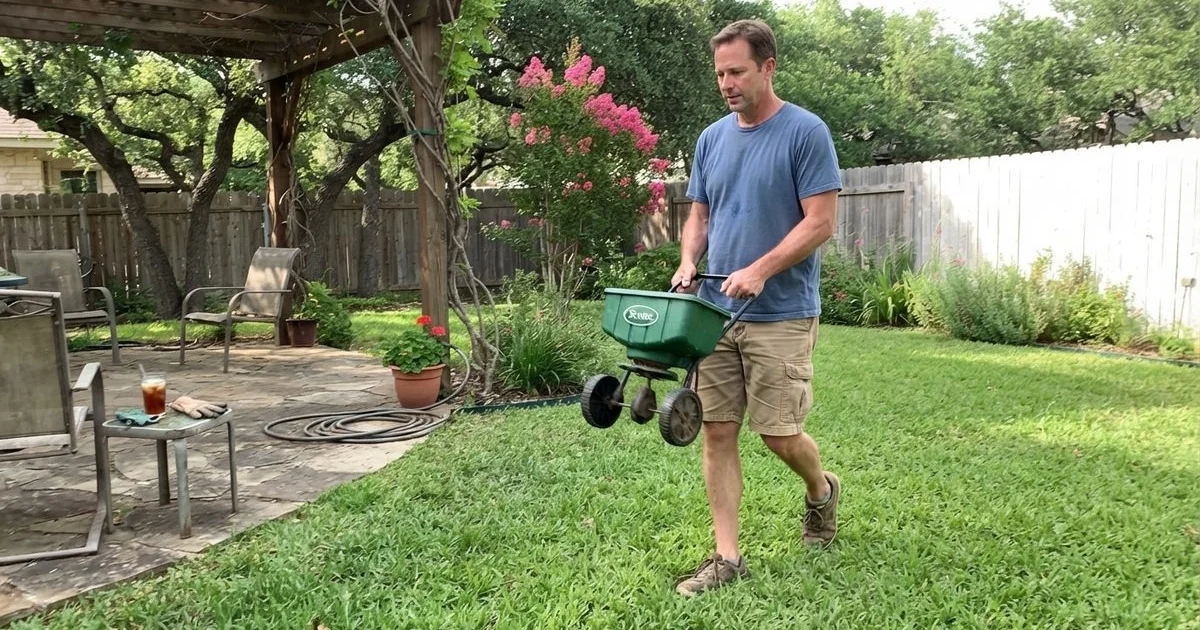
Austin’s warm-season grasses (mostly St. Augustine, Bermuda, and Zoysia) follow a different calendar than lawns in cooler climates, and timing matters more than most homeowners expect. Doing the right task at the wrong time of year can do more harm than skipping it altogether.
Spring: green-up and first feeding
As soil temperatures rise and the lawn starts actively greening up, this is the window for the first fertilizer application and any pre-emergent weed control aimed at summer weeds. Mowing frequency increases as growth picks up. This is also a good time to address any bare patches from winter with reseeding or sod, while the grass is entering its strongest growth period.
| Season | Key tasks | What to avoid |
|---|---|---|
| Spring | First fertilizer, pre-emergent weed control, patch repair | Fertilizing before active green-up |
| Summer | Deep watering (within restrictions), pest monitoring, higher mowing height | Overwatering, cutting too short |
| Fall | Second fertilizer, aeration follow-up, overseeding if needed | Heavy fertilizing too late in the season |
| Winter | Minimal mowing, dormancy, light debris cleanup | Assuming a dormant lawn is dead |
Summer: heat management, not just watering
Peak Austin summer is more about managing heat stress than pushing growth. Watering deeply but less frequently (within whatever restrictions apply that season) encourages deeper roots that handle heat better than frequent shallow watering. Raising the mower height slightly during the hottest stretch helps the lawn shade its own soil and retain moisture. This is also the season to watch for fungal issues and pest pressure like chinch bugs, which show up more in stressed, heat-affected lawns.
Fall: the second most important feeding
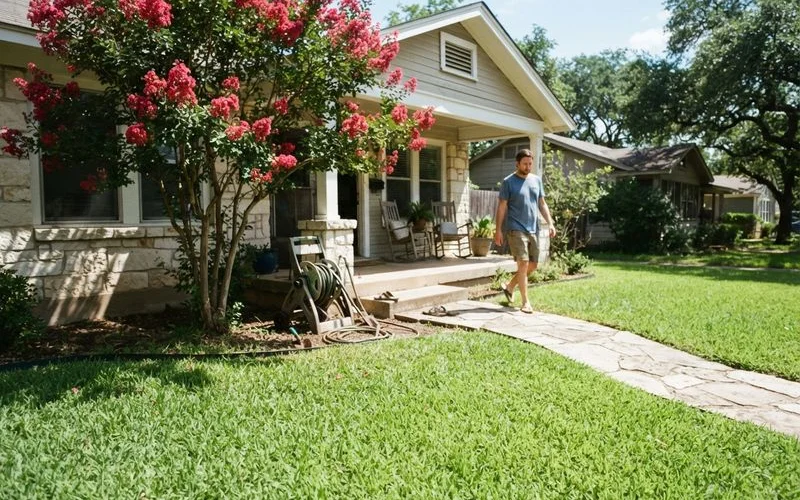
A fall fertilizer application, timed before growth slows for the season, helps the lawn build root reserves that carry it through winter dormancy and support a stronger spring green-up. This is also a reasonable window for aeration if it wasn’t done in late spring, and for overseeding thin areas before growth stops for the year. Avoid heavy fertilizing too late in the season, since it can push tender new growth right before a cold snap.
Winter: mostly rest, with occasional attention
Warm-season grasses go dormant through Austin’s winter, so mowing and watering needs drop substantially. That said, mild winter weeks can bring some growth, so it’s worth checking rather than assuming the lawn needs zero attention until spring. Winter is also a reasonable time for structural work, tree trimming, hardscape projects, or planning next year’s changes, since the lawn itself isn’t in active growth to worry about disturbing.
Adjusting the calendar to your actual lawn
This is a general framework, and your specific grass type, sun exposure, and soil condition shift the exact timing. St. Augustine and Bermuda, for instance, respond somewhat differently to the same seasonal triggers. If a lawn consistently struggles at the same point every year, that’s a sign to get a soil test or a professional opinion rather than just repeating the same seasonal routine and hoping for a different result.
Weed control timing matters as much as fertilizer timing
Pre-emergent weed control works by stopping weed seeds from germinating, which means it has to go down before the weeds actually appear, not after you spot them coming up. Applying it late in spring, once summer weeds have already sprouted, is largely wasted effort. Post-emergent treatments for weeds already growing are timed differently and are more forgiving, but the two shouldn’t be confused when planning a season’s weed program.
Building a simple year-round routine
Rather than trying to remember every seasonal task from scratch, many Austin homeowners find it easier to set a recurring reminder tied to rough seasonal windows: early spring for the first fertilizer and pre-emergent, early summer for a mowing height adjustment, early fall for the second feeding, and a late fall check for any last patch repair before dormancy. Whether you handle this yourself or hire it out, having the rhythm in mind makes it much easier to catch the moments where timing genuinely matters.
When a maintenance plan makes more sense than doing it piecemeal
Because so much of Austin lawn care depends on hitting the right seasonal window, a bundled maintenance plan with a lawn care company can take the timing question off your plate entirely. This is especially useful for a first year in a new yard, or for anyone who’s found themselves fertilizing at the wrong time more than once and wants a professional to keep the calendar instead. Our guide on DIY lawn care vs hiring a pro in Austin walks through that tradeoff in more depth.
To find lawn care providers who can build a maintenance plan around Austin’s seasons, visit the lawn care and maintenance hub. See our methodology for how listings are evaluated, and learn more about this directory on the homepage.
FAQ
- When should I fertilize my Austin lawn?
- Typically in spring once the lawn is actively greening up, and again in early fall. Fertilizing too early, before the grass is actively growing, wastes product and can encourage weeds instead.
- Do I need to mow year-round in Austin?
- Mowing frequency drops significantly in winter as warm-season grasses go dormant, but mild winter weeks can still bring some growth, so check rather than assuming it's fully off until spring.
- When is the best time to aerate an Austin lawn?
- Late spring through early summer, while the grass is actively growing and can recover quickly from the process. Aerating a dormant lawn doesn't give it time to bounce back.
- How often should I water in summer vs winter?
- Summer watering needs are much higher due to heat, though always within current city restrictions. Winter watering needs drop substantially since dormant grass isn't actively using much water.
Related on this site
- Browse lawn care & maintenance providers
- Best lawn care & maintenance in Central Texas →
- What lawn care costs in Austin: mowing, maintenance, and what changes your rate
- DIY lawn care vs hiring a pro in Austin: what actually makes sense
- Reviving an Austin lawn after freeze or drought damage
- Getting your yard ready to sell a house in Austin
- All guides →