Who is liable when a tree falls and damages a neighbor's property in Austin
By Rachel Delgado · Updated 2026-06-25
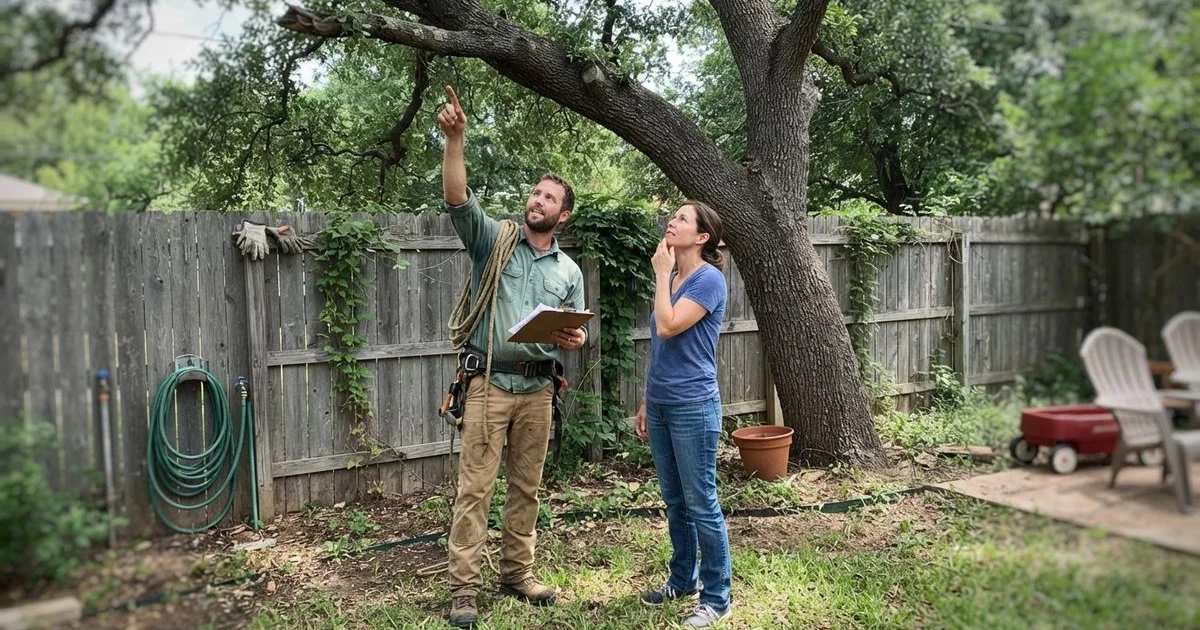
A tree falling across a property line is stressful enough without also trying to figure out who pays for the damage. In Texas, the answer isn’t automatic, and it depends on details that are worth understanding before something happens, not after.
This is general information, not legal advice. For a specific situation, especially one involving significant damage, consult a licensed attorney or your insurance provider.
The general rule in Texas
Liability for a fallen tree in Texas typically hinges on whether the tree was healthy or showed signs of being a hazard before it fell, and whether the owner knew or reasonably should have known about that condition. A tree that falls during a severe storm with no prior warning signs is generally treated differently than one that was visibly dead, leaning, or previously flagged as a risk and left unaddressed.
| Situation | General tendency |
|---|---|
| Healthy tree falls in a storm | Often treated as an act of nature, no clear fault |
| Visibly dead or hazardous tree falls | Owner’s prior knowledge becomes relevant |
| Owner was warned and did nothing | Weighs more toward owner responsibility |
| Tree roots damage a foundation over time | Different legal analysis than a sudden fall |
What to do first if it happens to you
Document everything before any cleanup starts: photos of the tree, the damage, and if possible the tree’s condition before it fell (old photos, prior complaints, or communication with the neighbor). Contact your homeowner’s insurance early, since many policies cover the damage to your property regardless of whose tree caused it, and let the insurers work out responsibility between themselves rather than trying to resolve it directly with a neighbor in the moment.
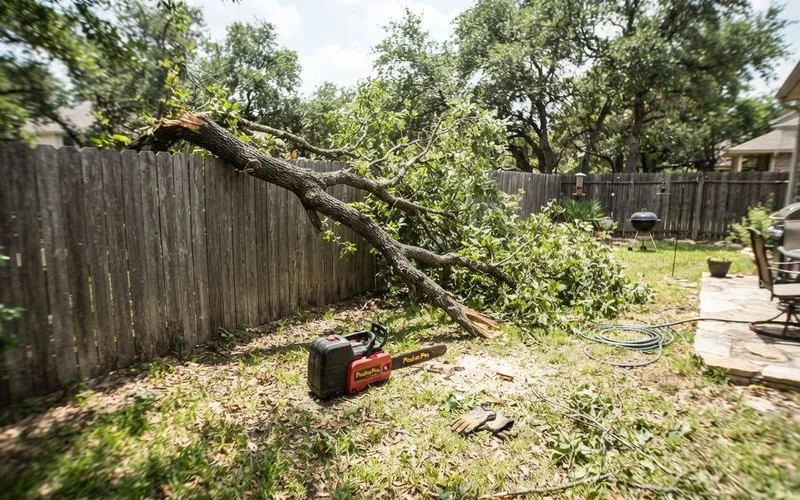
If you’re worried about a neighbor’s tree before it falls
If you notice a neighbor’s tree leaning, showing dead branches, or otherwise looking unstable, raise it with them directly and follow up in writing (a text or email creates a record). Our guide on warning signs your tree is sick or dying covers what those signs actually look like before a tree becomes a hazard. Don’t attempt to trim or remove any part of a tree that isn’t on your property without permission, even if it’s overhanging your yard, since that can create its own liability. If the tree looks like an immediate safety risk, contact the city or a licensed arborist for an independent assessment.
Getting an arborist’s opinion
An ISA certified arborist can assess a tree’s health and document any visible risk factors, which becomes useful evidence if a dispute or insurance claim comes up later. This is worth doing proactively for any large tree near a shared property line, rather than waiting until after a storm to find out whether it was a known risk.
After the fact
Once damage has happened, resist the urge to negotiate directly with a neighbor before talking to your insurer, since informal agreements can complicate a claim later. If the disagreement over responsibility persists after insurance has been involved, that’s the point to consider consulting an attorney, especially for damage beyond a straightforward insurance payout.
Roots and slow damage are a different question
A sudden tree fall is one kind of dispute; a neighbor’s roots slowly cracking a driveway, lifting a fence, or infiltrating a sewer line over years is another. This kind of gradual, ongoing damage tends to raise different questions than a single storm event, since it’s harder to point to one moment when the owner should have known there was a problem. If you’re dealing with slow root damage rather than a sudden fall, document the progression with dated photos over time, since that history matters more here than in a one-time incident.
Whose responsibility is removal after damage
If a fallen tree or limb from a neighbor’s property lands on yours, the general expectation is that each property owner is responsible for removing debris that lands on their own side of the line, regardless of where the tree originated, unless insurance or a direct agreement says otherwise. This surprises people, but it’s the more common default. Confirming this with your insurer before hiring a cleanup crew avoids paying out of pocket for something a policy would have covered.
Keeping the relationship workable
Even in a clear-cut liability situation, how a dispute gets handled affects the neighbor relationship long after the tree is gone. Approaching the conversation with documentation rather than accusation, and letting insurers do the negotiating where possible, tends to keep things from escalating into something harder to resolve than the original damage.
To find tree service companies who can assess a hazardous tree, visit the tree service and arborist hub. See our methodology for how we evaluate and rank providers. Learn more about this directory on the homepage.
FAQ
- Is my neighbor automatically responsible if their tree falls on my property?
- Not automatically. In Texas, liability generally depends on whether the tree was healthy or showed visible signs of being a hazard beforehand, and whether the owner reasonably should have known about it.
- What if the tree was clearly dead or dying before it fell?
- If a property owner knew or reasonably should have known a tree was hazardous and did nothing, that tends to weigh toward their responsibility. Documentation of the tree's condition before the incident matters a lot here.
- Does my homeowner's insurance cover damage from a neighbor's tree?
- Often yes, your own policy may cover the damage regardless of fault, since many policies are designed to pay out and let insurers sort out responsibility between themselves. Check your specific policy.
- Should I remove a tree myself if it's leaning toward my neighbor's house?
- No, don't remove a tree on someone else's property without permission, even if it looks hazardous. Document the concern and raise it with the owner or, if unsafe, contact the city or an arborist for an assessment.
Related on this site
- Browse tree service & arborist providers
- Best tree service & arborist in Central Texas →
- How tree removal works in Austin, from quote to cleanup
- Tree removal laws and permits in Austin: what homeowners need to know
- Warning signs your tree is sick or dying in Austin, and what to do next
- Do you need a licensed irrigator in Texas? What the law requires
- All guides →