Xeriscape and water-wise rebates in Austin: free and low-cost ways to cut your water bill
By Rachel Delgado · Updated 2026-07-01
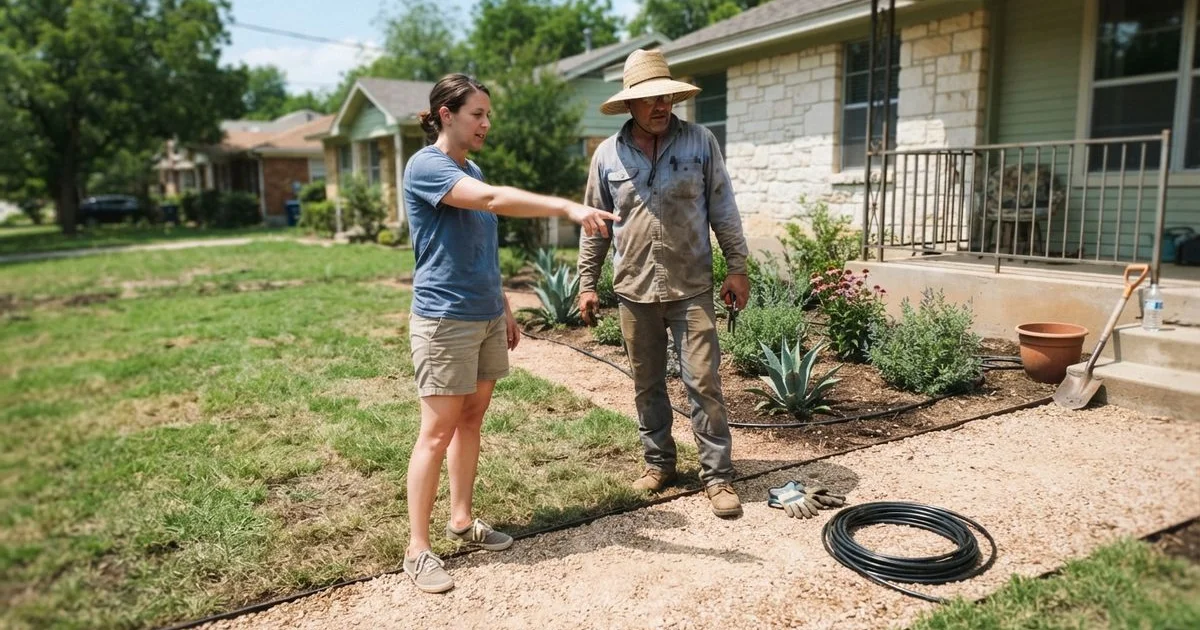
Converting part of a water-hungry lawn to drought-tolerant planting is one of the more practical ways to lower a water bill in Austin, and it doesn’t have to mean redoing the entire yard at once. Austin Water has historically offered rebate and incentive programs to support exactly this kind of conversion, though program terms shift, so treat the general idea here as a starting point and confirm current details before applying.
What water-wise programs typically cover
Programs like these are usually designed to offset part of the cost of removing turf and replacing it with drought-tolerant plants, mulch, or other water-wise landscaping. Some programs have also supported smart irrigation controller rebates, since a controller that adjusts to weather can meaningfully cut water use even without changing what’s planted.
| Approach | Typical impact | Cost to start |
|---|---|---|
| Partial lawn conversion | Moderate, scales with area converted | Low to moderate |
| Smart irrigation controller | Moderate, works with existing landscaping | Low |
| Rain sensor add-on | Small but consistent | Very low |
| Full xeriscape conversion | High, but a bigger upfront project | Moderate to high |
Before you apply for anything
Rebate programs change their funding, eligibility, and application windows over time, and sometimes pause entirely when funding runs out for a given year. Before planning a project around a specific rebate amount, check directly with Austin Water for current program status, application steps, and any documentation (before-and-after photos, plant lists, receipts) they require.
Starting small: a partial conversion
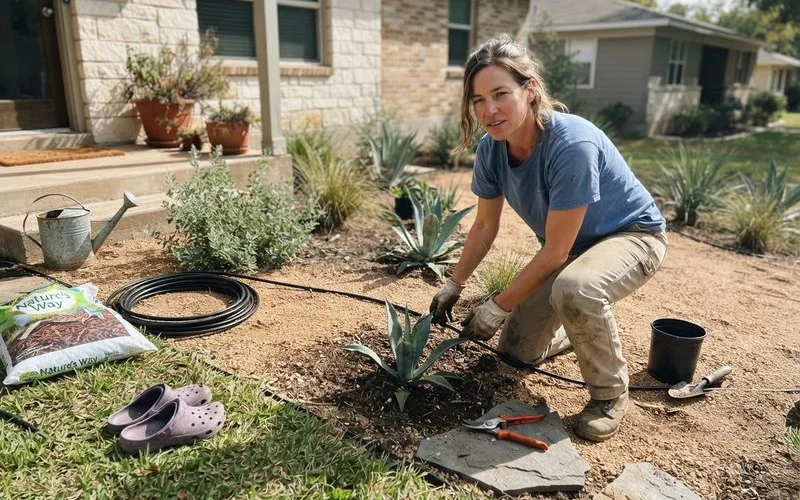
You don’t need to redo an entire yard to see a difference. Converting a section, a strip along the driveway, a sunny corner that struggles anyway, is a reasonable way to test the approach and see how much a smaller area actually reduces watering needs before committing to more. Xeric plants suited to Central Texas climate need far less supplemental water once established, which is where the ongoing savings comes from.
Other low-cost ways to cut water use
Beyond a full conversion, a few smaller changes add up: a rain sensor that automatically skips a watering cycle after rainfall, adjusting sprinkler run times seasonally instead of leaving them on a fixed schedule year-round, and grouping plants by water need so you’re not overwatering drought-tolerant areas to keep thirstier plants alive nearby. None of these require a rebate to be worth doing. If pesticide or fertilizer use is also part of how you maintain the rest of the yard, our guide on lawn chemical and pesticide safety for kids and pets covers safer practices around treatments.
Finding help with the transition
If a full conversion feels like more than you want to plan solo, a landscaper experienced in xeriscape and native planting can help design a layout that still looks intentional rather than sparse, which is a common concern homeowners have before converting. Ask about their experience specifically with drought-tolerant design, since it’s a different skill set than standard turf-and-bed landscaping.
Picking plants that actually fit the site
A xeriscape conversion works best when the plant choices match the specific sun, soil, and drainage of the spot being converted, not just a generic list of drought-tolerant species. A xeric plant suited to a fast-draining, full-sun corner may struggle in a low spot that holds water after rain. Walking the area at different times of day before finalizing a plant list, or asking a designer to do the same, avoids a conversion that looks great on paper but underperforms once it’s in the ground.
HOA rules and neighborhood expectations
If your property is in an HOA, check the community’s landscaping rules before converting a visible section of turf, since some HOAs have specific guidelines about front-yard plantings even when the change is water-saving. Bringing photos of a well-designed xeriscape conversion to an HOA request, rather than describing it in the abstract, tends to make approval easier, since it addresses the common concern that a conversion will look unkempt.
Keeping track of the results
Save a few water bills from before the conversion so you have a real comparison point once the new planting is established, typically after the first full growing season. This also gives you the documentation many rebate programs ask for if you’re applying after the fact, and it’s satisfying to see the actual number rather than just assuming the change helped.
To find providers experienced in organic and water-wise landscaping in Austin, visit the organic and eco-friendly lawn care hub. See our methodology for how listings are evaluated, and learn more about this directory on the homepage.
FAQ
- Does Austin offer rebates for converting a lawn to xeriscape?
- Austin Water has run rebate programs supporting water-wise landscaping conversions in the past. Program details, funding, and eligibility change, so check the current status directly with Austin Water before planning around a specific rebate amount.
- Do I need a professional to qualify for a rebate?
- This depends on the specific program's rules at the time you apply. Some water-wise programs accept DIY conversions with photo documentation, others may have different requirements. Confirm before starting the work.
- Is xeriscaping the only way to reduce a water bill?
- No. Smart irrigation controllers, rain sensors, and simply reducing turf area in favor of mulched beds can all lower water use even without a full xeriscape conversion.
- How much can converting part of a lawn actually save?
- It depends heavily on how much area is converted and your current watering habits. A partial conversion of a few hundred square feet is a reasonable starting point if you want to see a difference without redoing the whole yard.