Poison ivy, fire ants, and other yard hazards in Austin before you DIY
By Rachel Delgado · Updated 2026-06-29
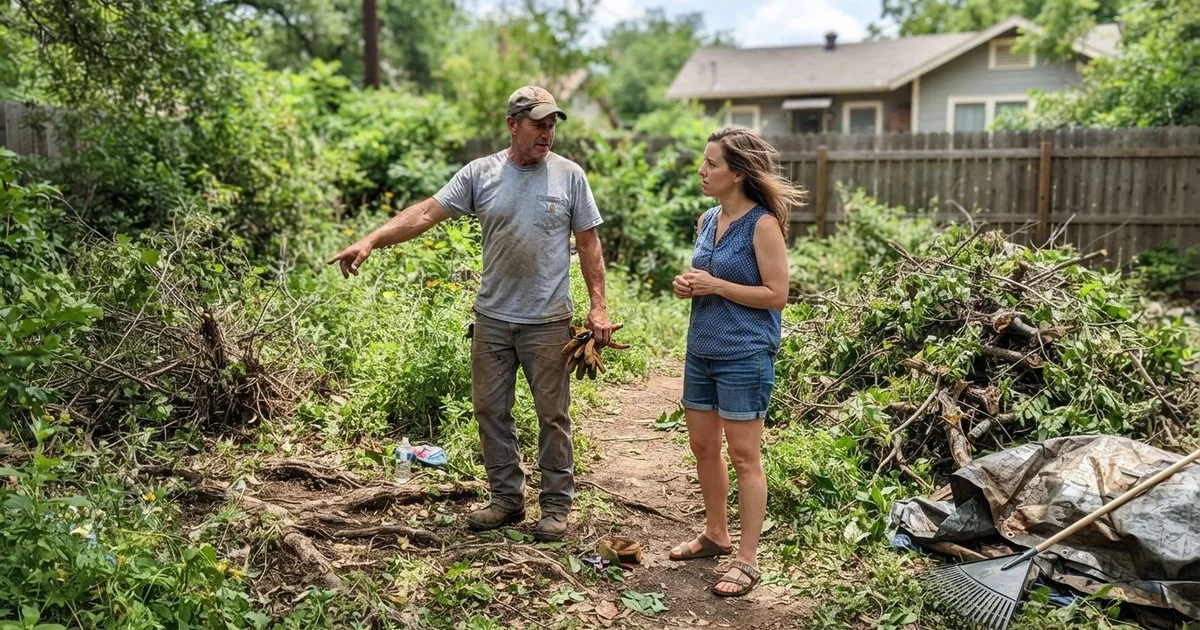
Yard work in Austin comes with a handful of hazards that are easy to overlook until you’re already elbow-deep in an overgrown bed. None of these are reasons to avoid DIY yard projects, but knowing what to look for makes the work safer.
This is general information, not medical advice. If you have a reaction to a plant, insect, or animal encounter, contact a doctor promptly.
Poison ivy
Poison ivy grows readily in Austin, especially along fence lines, in overgrown beds, and climbing trees. The classic identifier is three leaflets per stem, but color and shape vary enough through the seasons that it’s easy to mistake for other vines. If you’re clearing an area you suspect might have it, wear long sleeves, pants, and gloves, and wash exposed skin and clothing promptly afterward, since the oil that causes reactions can transfer from clothing and tools for a while after contact.
Fire ants
Fire ant mounds are common in Austin lawns, particularly after rain. Disturbing a mound directly, by mowing over it or digging near it, is the most common way people get stung. Bait treatments placed near a mound tend to work better and more safely than pouring liquid directly onto it, which often just scatters the colony rather than eliminating it.
| Hazard | Where it shows up | Basic precaution |
|---|---|---|
| Poison ivy | Fence lines, overgrown beds, climbing trees | Long sleeves, gloves, wash after contact |
| Fire ants | Lawns, especially after rain | Avoid disturbing mounds directly, use bait |
| Snakes | Brush piles, tall grass, wood/rock piles | Boots and gloves when clearing dense areas |
| Wasps and hornets | Eaves, dense shrubs, ground nests | Watch for activity before trimming near nests |
Snakes and dense brush
Central Texas has a mix of nonvenomous and venomous snake species, and both tend to favor the same conditions: brush piles, tall grass, and areas around wood or rock that hold cover. Wearing boots and gloves when clearing overgrown or long-untouched areas, and moving debris with a rake rather than bare hands, reduces the chance of an unexpected encounter.
Wasps and ground-nesting insects
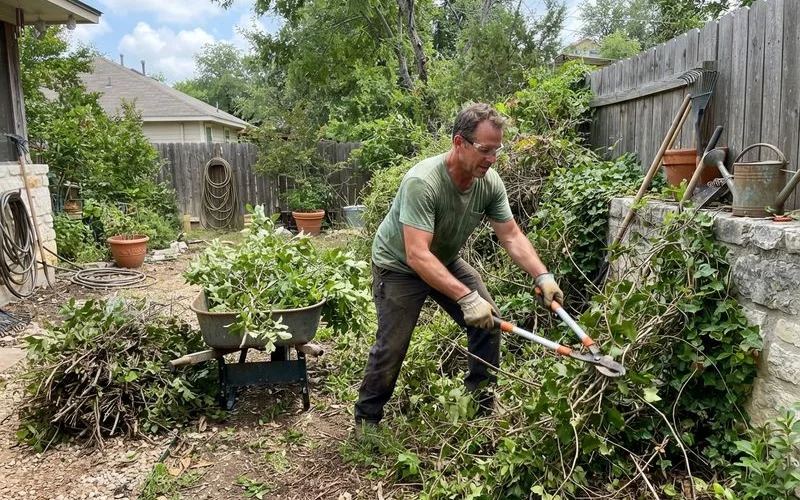
Dense shrubs, eaves, and sometimes ground nests hidden in tall grass can house wasps or hornets that go unnoticed until a mower or trimmer disturbs them. A quick visual check of the area before starting trimming or mowing, especially in parts of the yard that haven’t been touched in a while, is worth the extra minute.
When it makes sense to call a pro instead
Large or well-established poison ivy patches, an aggressive or recurring fire ant problem, or a confirmed snake sighting in an area you need to work in regularly are all reasonable points to bring in a professional rather than handling it solo. This isn’t about avoiding yard work altogether, it’s about recognizing when a hazard is bigger than a pair of gloves and some caution can safely handle.
Basic gear worth having on hand
A few items make most of these hazards easier to manage safely: sturdy gloves that actually cover the wrist, boots rather than sneakers for anything involving brush or tall grass, and a rake or long-handled tool for moving debris instead of using bare hands. None of this is expensive, and having it on hand before starting a project removes the temptation to just wade in and hope for the best.
Pets and yard hazards
Dogs in particular tend to investigate fire ant mounds, brush piles, and dense undergrowth before a person notices there’s anything there, so a quick walk of the area before letting a pet loose in an overgrown section is worth the extra few minutes. If a pet does get stung or bitten, keep an eye out for swelling, excessive licking at one spot, or unusual lethargy, and contact a veterinarian if symptoms seem more than mild irritation. Our guide on lawn chemical and pesticide safety for kids and pets covers the product-safety side of protecting pets in the yard.
After a big cleanup
Once an overgrown area has been cleared, it’s worth doing a final walk-through to check for any missed poison ivy runners or disturbed insect nests before calling the project done. Established hazards don’t always show up fully until the area has been disturbed, so a second look a day or two later isn’t unreasonable, especially before letting kids or pets use the space freely.
To find local providers who handle yard cleanup and maintenance in Austin, visit the homepage to browse the full directory, and see our methodology for how listings are evaluated.
FAQ
- How do I tell poison ivy apart from other vines in Austin?
- The classic rule is three leaflets per stem, with the middle leaflet on a slightly longer stalk. Leaves can be glossy or dull and vary in shape, which is part of why it's easy to misidentify.
- What's the safest way to deal with a fire ant mound?
- Avoid disturbing it directly. Bait treatments placed near, not on, the mound tend to be more effective and safer than pouring anything directly onto it, which can just scatter the colony.
- Are there snakes to watch for while doing yard work in Austin?
- Central Texas has both nonvenomous and venomous snake species. Wearing boots and gloves while clearing brush or overgrown areas, and being cautious around wood or rock piles, reduces the chance of a surprise encounter.
- Should I remove poison ivy myself?
- Small patches can sometimes be removed carefully with gloves and long sleeves, bagging everything rather than composting it. Large or established patches are often easier and safer to leave to a professional.